
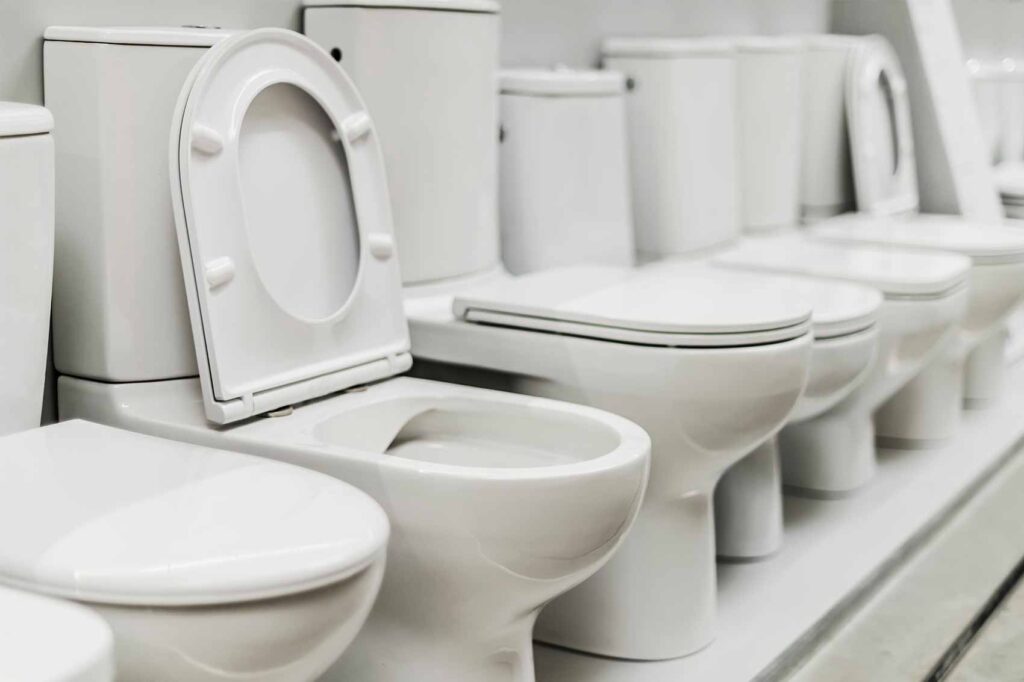
If you need to unclog your toilet on a regular basis, this may indicate an issue with the toilet itself. In some cases, replacement is unavoidable, and you may decide to attempt the installation yourself.
Installing a toilet or a bidet may seem simple at first glance, but it requires proper preparation and a basic understanding of plumbing. A well-executed installation helps prevent leaks, odors, and recurring issues over the long term.
The good news? We explain here how to properly install your toilet and your bidet.
Choosing the Right Toilet
Choosing the right toilet is an essential step before any installation. Not all models are created equal, and some are better suited for heavy residential use than others. It’s important to consider:
- the type of flushing system
- the bowl height
- water consumption
- the trapway diameter
- your preference for bowl shape (round for small spaces, elongated for added comfort)
When replacing an existing toilet, it is also essential to check the distance between the wall and the floor flange, often referred to as the “rough-in”. Not all models are compatible with the same outlet location, and a mismatch can prevent installation or require costly modifications to the toilet plumbing. Before purchasing, it’s important to ensure that the new toilet is compatible with the drain opening location to avoid unpleasant surprises.
Choosing a high-performance, well-known model helps improve comfort, reduce the risk of clogs, and ensure a long-lasting installation. A plumber can also advise you on the models best suited to your existing plumbing and your day-to-day needs.
Installing a Bidet: An Increasingly Popular Option
More and more homeowners are choosing to install a bidet, whether as a standalone unit or a bidet seat compatible with an existing toilet. Bidets offer greater comfort, improved hygiene, and help reduce toilet paper use.
However, some models require an electrical connection or adjustments to the existing plumbing. Before purchasing, it is strongly recommended to compare the available options and verify their compatibility with your setup.
On this topic, this article from Protégez-Vous (in French) provides an excellent overview of the models and criteria to consider: https://www.protegez-vous.ca/habitation/bidet.
How to Install a Toilet?
Preparing for Toilet Installation
Before installing a toilet, make sure to shut off the water supply and completely drain the existing toilet. The old unit must then be removed carefully, the floor flange cleaned, and its condition checked. A damaged or improperly positioned flange can lead to significant leaks.
Steps to Install a Toilet
- Install the wax ring
Place the wax ring directly onto the floor flange (the drain opening), making sure it is properly centered. Some prefer to attach it to the underside of the toilet, but the key is ensuring perfect alignment with the opening to create a complete seal between the toilet and the drain. - Position the new toilet
Lower the toilet into place, carefully aligning the base holes with the mounting bolts. Press down firmly and evenly to compress the wax ring and create a proper seal. - Secure the toilet and check the level
Tighten the nuts gradually, alternating from side to side. Avoid overtightening to prevent cracking the porcelain. Use a level to ensure the toilet is perfectly straight. -
Connect the water supply
Attach the water supply line to the tank, then slowly turn the valve back on to fill the toilet. - Test the installation
Flush the toilet several times to ensure proper drainage and to confirm there are no leaks, both at the base and at the water connection. - Optional step: apply silicone sealant
Once the toilet is securely installed and perfectly level, it is recommended to apply a thin bead of sanitary silicone around the base of the toilet, leaving a small gap at the back. This sealant helps stabilize the toilet and prevents urine from seeping underneath the base in case of an incident. The gap at the back allows water to escape in the event of a leak (instead of becoming trapped under the toilet, which would make leak detection more difficult).
Please always make sure to follow the manufacturer’s instructions when installing a toilet or any plumbing fixture.
Installing a Bidet Integrated into the Toilet
Once the toilet is installed, if it is equipped with a bidet or if you are adding a bidet seat, installation is usually completed in a few simple steps:
- Shut off the water supply
Close the toilet shut-off valve and empty the tank by flushing the toilet. - Remove the toilet seat
Unscrew and remove the existing seat to free up the mounting points. - Install the bidet or bidet seat
Position the bidet according to the manufacturer’s instructions and secure it firmly to the bowl using the supplied bolts. - Connect the water supply
Install a T-adapter between the shut-off valve and the toilet supply line to provide water to the bidet. - Turn the water back on and check for leaks
Slowly open the shut-off valve and make sure there are no leaks at the connections. - Test the operation
Activate the bidet at low pressure to confirm everything is working properly before normal use.
Some models require an electrical outlet for advanced features. In this case, make sure the electrical installation is compliant, or consult a professional.
Installing a Toilet or a Bidet Yourself Isn’t for Everyone!
Even with good guides, installing a toilet or a bidet isn’t a task everyone is comfortable with. As humorously pointed out by Martin Matte in this well-known segment from Les Beaux Malaises, plumbing can quickly become a source of stress and frustration for some.
Don’t hesitate to seek help from a professional plumber! Using plumbing services ensures a compliant, safe, and long-lasting installation. A qualified plumber has the tools, experience, and expertise needed to avoid common mistakes and respond quickly if complications arise.
Whether it’s for a new installation, a replacement, or a plumbing adjustment, professional expertise provides valuable peace of mind.
Plomberie Urgence Montréal: A Reliable Solution
If you’re planning to install a toilet or a bidet, or if you have concerns about your current setup, Plomberie Urgence Montréal can assist you. Our team responds quickly in Montréal, Laval, and the North Shore to deliver efficient, compliant installations.